

November 5, 2026
In a company-car fleet, the fleet manager is the person responsible for the cars the business provides to its employees: the contracts, the costs, the driver administration, the compliance records and the suppliers. Leasing companies and garages may arrange or carry out servicing and repairs, depending on the contract, but the organisation still needs someone to make sure that work is booked, completed and followed up. That person is the fleet manager, whatever their job title says.
In many organisations this is not a dedicated role. Fleet responsibility often sits with an HR manager, a finance lead or an operations administrator, alongside an already full job. If you are trying to run the fleet properly without it taking over your day, this article is written for you. The industry has a name for the position: the accidental fleet manager.
An accidental fleet manager is someone who is responsible for their organisation’s vehicles without fleet management being their job title or their main role. Typically they sit in HR, finance, procurement or office administration, and the fleet arrived with the job: someone had to own the lease contracts, the driver questions and the insurance renewals, and it became them. They manage anywhere from a handful of cars to a few hundred, usually with a spreadsheet, a shared inbox and whatever process the previous owner left behind. The term is not a criticism. Most company-car fleets in this size range are run this way, and run adequately — the risk is not the person but the setup: no dedicated time, no system of record, and deadlines that only surface when they are missed.
Company-car fleet management is mostly contract, cost and driver administration, plus making sure the vehicles are safe to drive. What the leasing company handles depends on the contract. Some agreements include maintenance, servicing and breakdown cover; others leave the customer to arrange them. Either way, the organisation remains responsible for managing the risks of work-related driving. In the UK, for example, the Health and Safety Executive places that duty on the employer. So the fleet manager coordinates maintenance, checks that it happens and escalates when it does not, even when a supplier does the work.
The recurring tasks are specific enough to list:
End-of-lease returns need specific attention: arranging the inspection, checking the vehicle's condition against the applicable fair wear and tear standard, and confirming that optional extras are recorded or removed. In the UK, the BVRLA standard is the recognised framework, and our guide to checking end-of-lease damage charges against BVRLA fair wear and tear covers it in detail; other markets have their own.
Driving licence checks are a compliance obligation for employer-provided vehicles in many markets. How often and how they are done varies by country. The fleet manager's job is to make sure a process exists, the records are current and gaps are followed up.
Even a modest fleet produces a steady stream of these events, and each carries a deadline or a cost. A renewal date kept in a spreadsheet tab nobody opens is a common way for avoidable cost to build up.
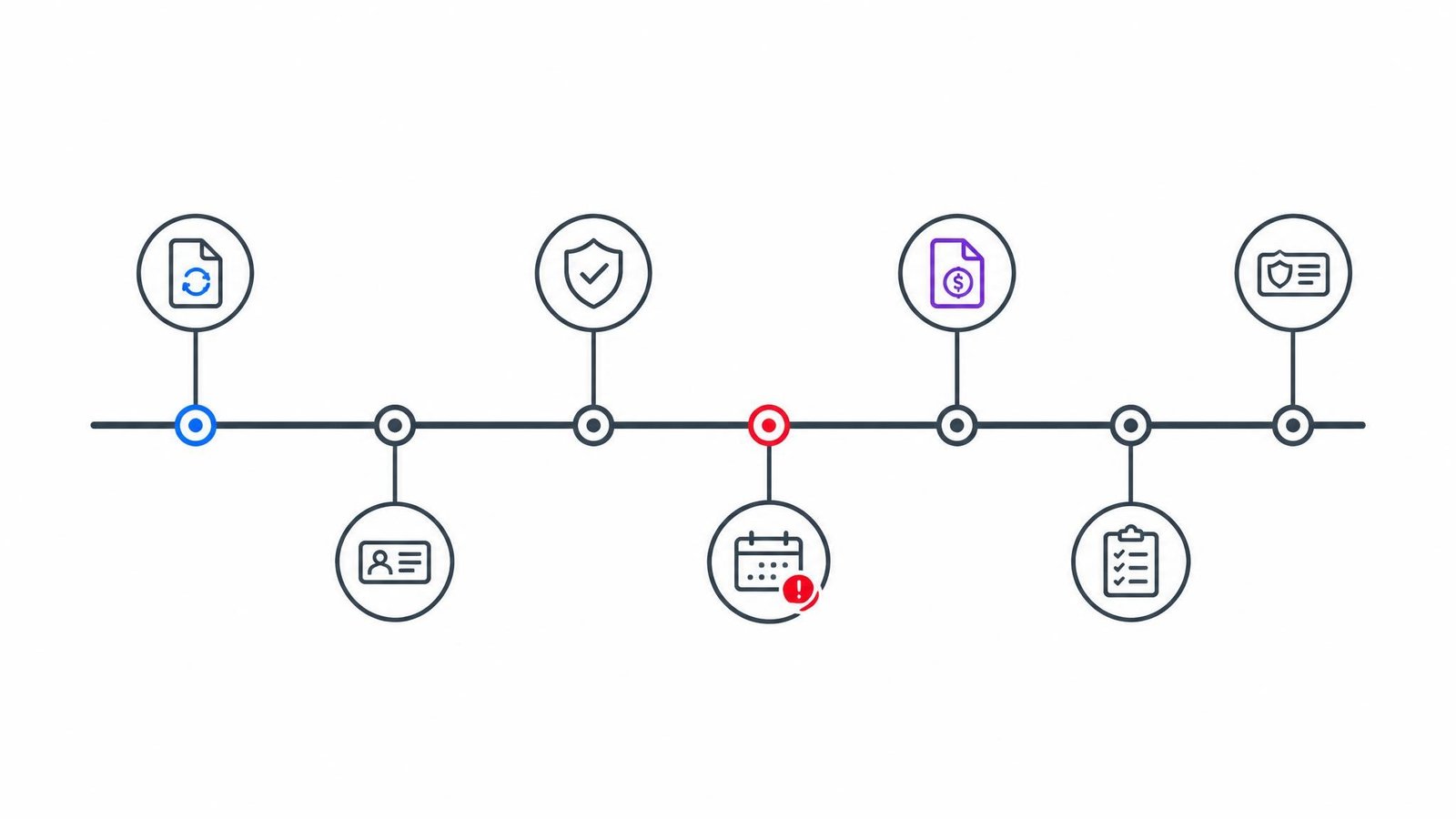
Fleet touches three functions without belonging fully to any of them. Organisations divide the work differently, but a common split looks like this, and it is worth agreeing your own version explicitly:
The boundaries blur in everyday situations. When an employee leaves, does HR tell fleet in time to return or reassign the car? When an invoice does not match the contracted rate, does finance pay it or send it back to fleet? When a driver asks whether a new role comes with a different car, who answers?
Each of these is routine, and each has a cost or compliance consequence when ownership is unclear.
Benefit-in-kind reporting sits between HR and finance. Whether it is handled by fleet, payroll or finance varies by organisation and by market, and local rules decide how it works. Whoever owns it, the fleet manager makes sure the underlying data (driver, vehicle, start and end dates) is accurate and available when payroll or finance needs it.
When fleet is a side responsibility, the first thing to settle is who owns which decision. Without that agreement, tasks fall into the gaps where each function assumes another is handling them.
The individual tasks are manageable. The difficulty is that they arrive alongside a full primary job, often without one place that shows what needs attention and by when.
Without that view, it is easy to work reactively: answering driver requests, supplier calls and finance queries as they come in, rather than working from a list of what is due, what has lapsed and what is at risk.
Contract end dates are the clearest example. If a renewal or return is not arranged before a contract ends, the vehicle may continue on an extension the organisation never planned, and with several vehicles that can happen to more than one at a time. What that costs depends on the agreement, and it often only comes to light when someone reviews the contracts.
Licence checks, insurance renewals and benefit-in-kind data have their own cycles, and when fleet competes with a primary job these are often the first to slip. Not every consequence is financial: a missed licence check can leave the employer exposed if a driver without a valid licence is involved in an incident.
Spending more hours on fleet is rarely the answer. Making the due dates and exceptions visible means attention goes where it is needed, rather than to whatever happens to arrive first.
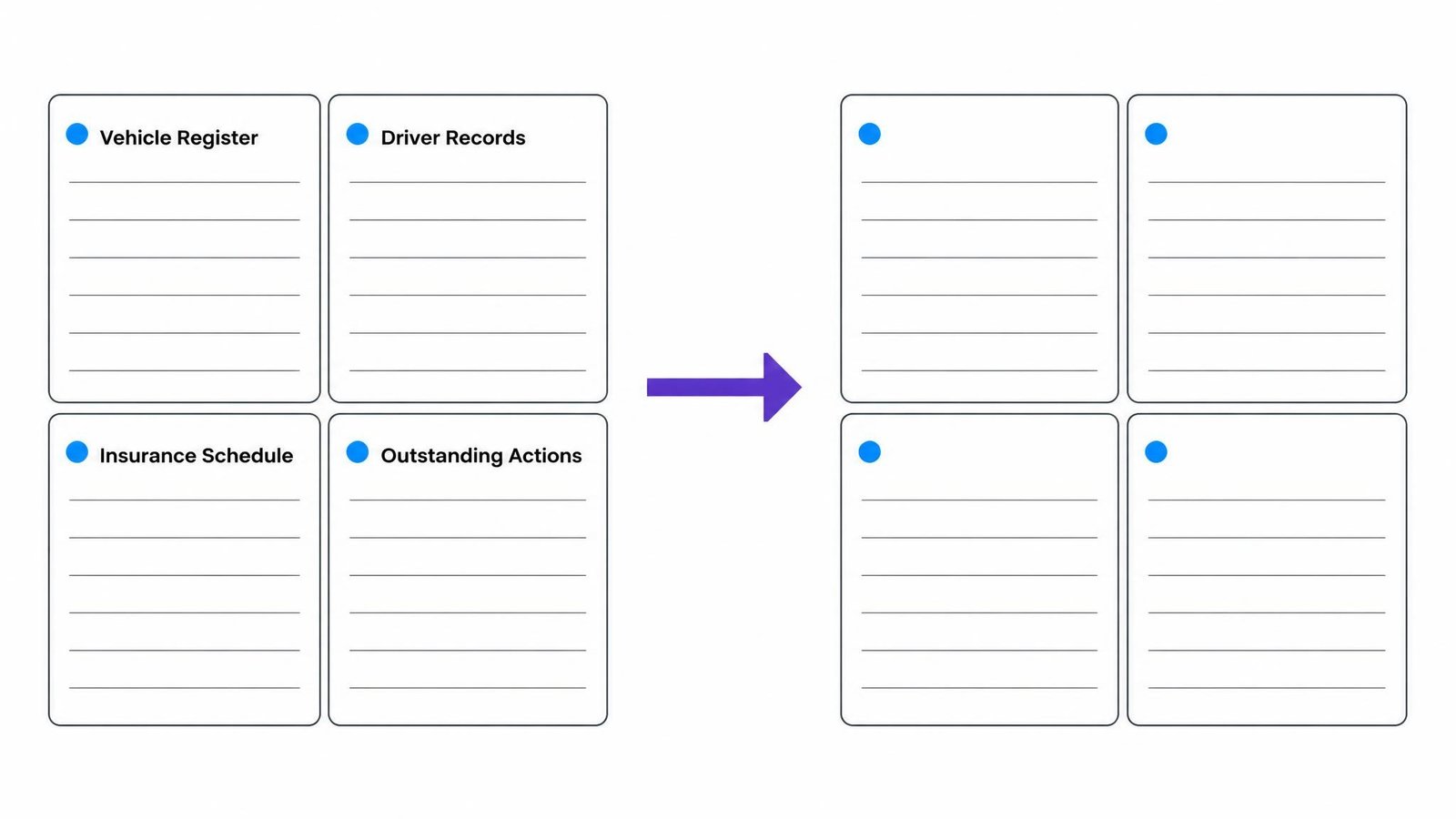
A handover can include a well-written document and still fail if the data behind it is out of date or scattered: renewal dates in a personal inbox, policy details known only to the person who arranged them, suppliers who know one name and not the next. A handover is complete when the information sits in a shared place the incoming manager can use without asking the outgoing one.
The records to bring up to date fall into four groups:
Introduce the incoming fleet manager to each supplier contact: the leasing company account manager, the insurance broker or administrator, and anyone else with a standing relationship. A supplier who does not know whom to call may call the wrong person, or no one.
List the recurring deadlines with enough lead time to act on them: the decision date for each contract, not just its end date; licence check cycles, which vary by market; insurance renewals; and any reporting periods agreed with finance or HR. Each one has a consequence when it is missed.
A handover document goes out of date quickly. A shared system, such as a fleet management system, that the incoming manager can search, without relying on the outgoing manager's memory, keeps working after the handover.
No single qualification is required to manage a company-car fleet. Competence comes from understanding the contracts, suppliers, compliance obligations and internal boundaries your organisation actually has.
Professional bodies and certification programmes exist in some markets for dedicated and senior fleet professionals. They are worth knowing about if fleet becomes a career direction. If fleet has been added to your existing job, the more immediate need is a working understanding of the key tasks and a reliable way to keep track of them.
The useful skills are practical:
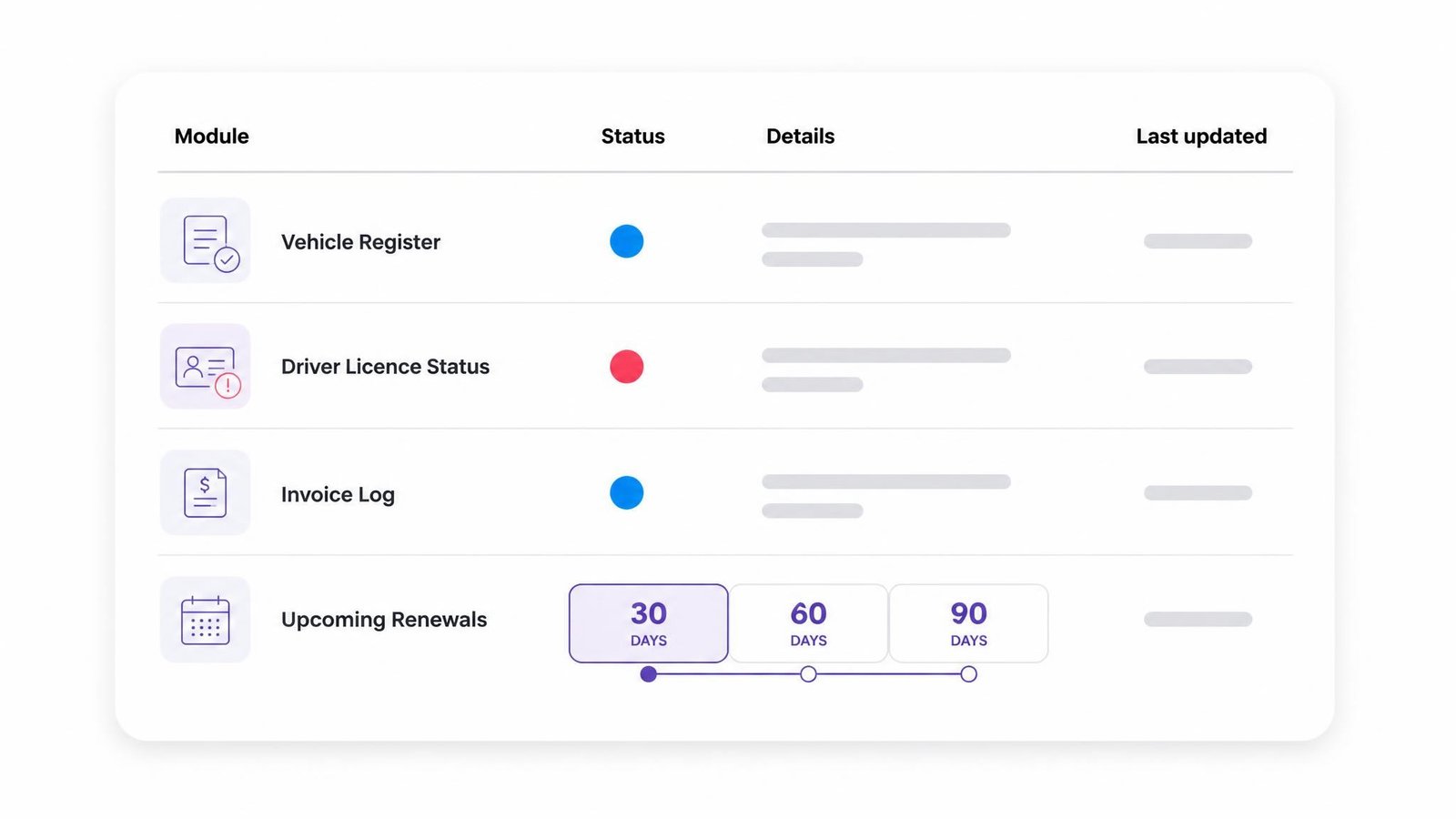
A practical test is whether you can answer three questions quickly from records you trust. What vehicles do we have? Where is each one in its contract? Which drivers are cleared to drive?
If answering takes an email to a supplier or a search through several spreadsheets, the records are probably not where they need to be, and that is worth fixing before it causes a missed deadline.
The information that should be visible without chasing:
The exceptions that should come to you without searching: a contract nearing its end with no decision recorded, an overdue licence check, an invoice that does not match the contracted rate. These are recurring events, not edge cases.
The principle is to automate the routine, surface the exception and keep people in control.
A good first step is to check whether contract end dates, driver assignments and licence check status are held in one accessible place. If they are not, that is the first thing to fix. OviDrive Essentials is designed for this situation: it keeps the vehicle, contract and driver records together and surfaces upcoming deadlines and exceptions, so less of your week goes on fleet administration. See how OviDrive's fleet management software works.
In organisations with a dedicated fleet manager, that person holds formal responsibility. In many others, an HR manager, finance manager or operations administrator carries it alongside another role. Either way, it helps to agree in writing which decisions belong to fleet, which to finance and which to HR.
Usually neither exclusively. A common split gives finance the budget and invoice approval, HR the eligibility and policy decisions, and fleet the vehicle records and supplier relationships. Organisations divide this differently, and local rules decide how benefit-in-kind reporting is handled.
It depends on the contract. Some leases include servicing, maintenance and breakdown cover; others leave the customer to arrange them. In both cases the organisation still needs someone to check that the work happens and to follow up when it does not.
At minimum: a current vehicle register with contract end dates and contract references, a driver list with licence check status and next due dates, the insurance schedule and renewal dates, open supplier actions, and a named contact at each key supplier, all held somewhere the incoming manager can access directly.
For savvy fleet managers looking for the latest trends and opportunities to improve their fleet's performance.


Copyright © OviDrive Group of Companies • Made with 💜 in Australia 🦘 • Operating in 36 countries and 3 continents 🌎
