

November 4, 2026
A leasing company's monthly invoice lists the same vehicles at the same rentals as last month. One of them was returned in the spring. It passes the purchase order match, the total is within a few percent of the forecast, and it is approved for payment. Nobody looks at that line again until the year-end review, by which time the fleet has paid several months of rental for a car it no longer holds.
Invoice reconciliation for fleet invoices means checking that the charges on lease, fuel, maintenance, insurance and ancillary invoices match the contract terms, the vehicle records and the period or event being charged. It answers a simple management question: are we spending what we should be spending, and can we explain it?
Fleet invoice reconciliation is the process of verifying each charge on a fleet invoice against three sources: the contract that sets the rate and scope, the vehicle record that shows what happened to the vehicle and when, and the invoice period or event the supplier is charging for. It covers lease rentals, fuel, maintenance, insurance and ancillary charges, each billed by different suppliers under different contract structures.
Accounts payable matching is a useful starting point, but it was not designed for this. A three-way match compares the invoice with a purchase order and a receipt, and it can check the invoiced price against the price on the purchase order. What it does not establish is whether that purchase order still reflects the current terms for a specific vehicle, or whether a lifecycle event such as a return, transfer or contract extension has changed what should be charged. Fleet reconciliation adds those two checks:
Both checks work at vehicle level. An invoice total can look plausible while individual lines are wrong.
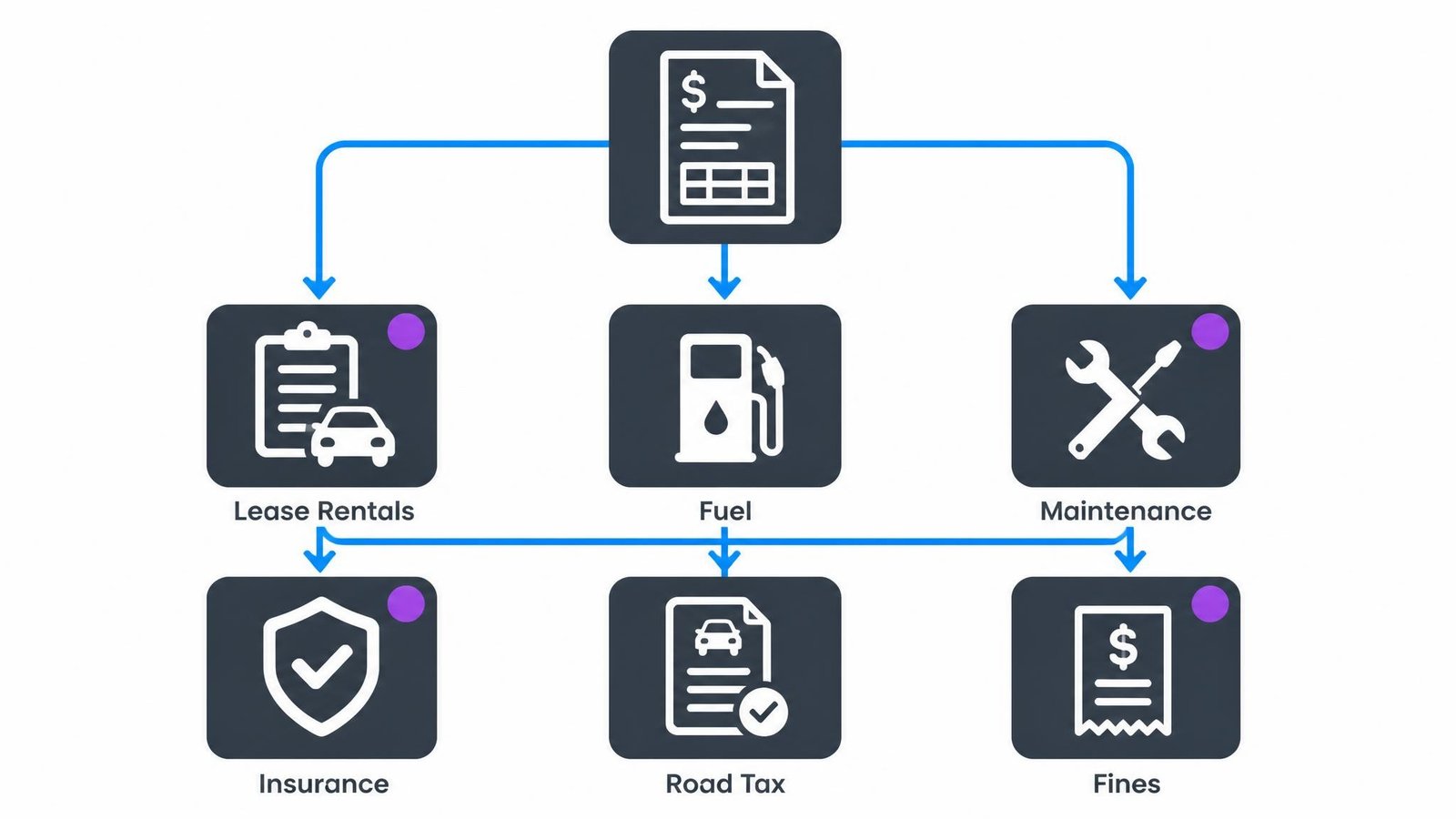
Each invoice category has its own contract structure and its own typical errors.
Lease rentals. The monthly rental should match the contract rate for that vehicle. Errors arise when a different rate is applied, or when rentals continue after a return or termination without a contractual basis, for example past the effective contract end date without an agreed extension. An unsupported continuing rental repeats every billing cycle, so its cost grows with each month it is missed.
Excess mileage charges. These are calculated from the contract's mileage allowance. Check three things together: the rate per kilometre in the contract, the recorded mileage at return, and the contract period used in the calculation. These charges normally arrive after the vehicle has gone back, so they are validated against the contract and the return record rather than against the live fleet.
End-of-lease recharges. Charges for damage, missing equipment or cleaning are a frequent source of disputes. The supplier's assessment should match the condition report completed at return. Without that report on file, verification is harder, and the supplier should be asked for supporting evidence for each item charged. In the UK, the BVRLA fair wear and tear standard is the recognised framework for judging whether a recharge is reasonable, and we cover how to apply it in our article on checking end-of-lease damage charges.
Fuel card statements. Fuel needs plausibility checks at transaction level. A refuel volume above the vehicle's tank capacity, a transaction far outside the driver's usual area, or several fills in a short period can each point to misuse or a data error. None of these shows up in the statement total.
Maintenance and tyres. For each item, establish whether it is included in the maintenance package, legitimately chargeable separately, or unsupported. A tyre replacement that the package covers, within its conditions, but that is invoiced separately is a recoverable overcharge. Work outside the package is not automatically invalid; it needs its own basis, such as an agreed rate or an authorised repair.
Insurance premiums. Premiums can drift from the fleet record when vehicles are added or removed without a mid-term policy adjustment, leaving the premium based on a vehicle count or specification that no longer applies.
Road tax and registration fees. In some markets the leasing company pays these and rebills them. Check for duplicates and for charges covering periods after a vehicle was deregistered or returned. Local rules decide who holds the obligation.
Fines and tolls. Match each charge to the vehicle record for the date of the offence or toll event. For a charge dated after the vehicle was returned or transferred, establish responsibility from the event date, the vehicle record and the applicable arrangements before paying or disputing it.
The category detail above comes down to four repeatable controls that a category manager, a finance lead or someone managing the fleet alongside another role can run each month.
Lifecycle check. For each charge, confirm that the vehicle's dates and the contract support it: a recurring rental, premium or fee should fall within the effective contract or policy period, and a final mileage or damage charge should relate to a completed return. Include insurance, road tax and registration invoices, which can continue to include charges for vehicles that have left the fleet. Unsupported recurring charges repeat until they are stopped.
Contract-rate compliance. Confirm that the invoiced rate matches the current signed contract for that vehicle, including any amendments. Lease rentals, excess mileage rates and maintenance labour rates all fall under this check.
Maintenance scope. Confirm whether each item of work is included in the maintenance package, chargeable separately under the contract, or unsupported.
Fuel plausibility. Check refuel volumes against tank capacity, flag transactions outside the driver's usual area and look for repeated fills in a short period.
Most of these checks are rule-based, which makes them suitable for automation once contract and vehicle data are available in a structured form, such as a fleet management system. The charges that fail a check are the ones that need a person to decide.
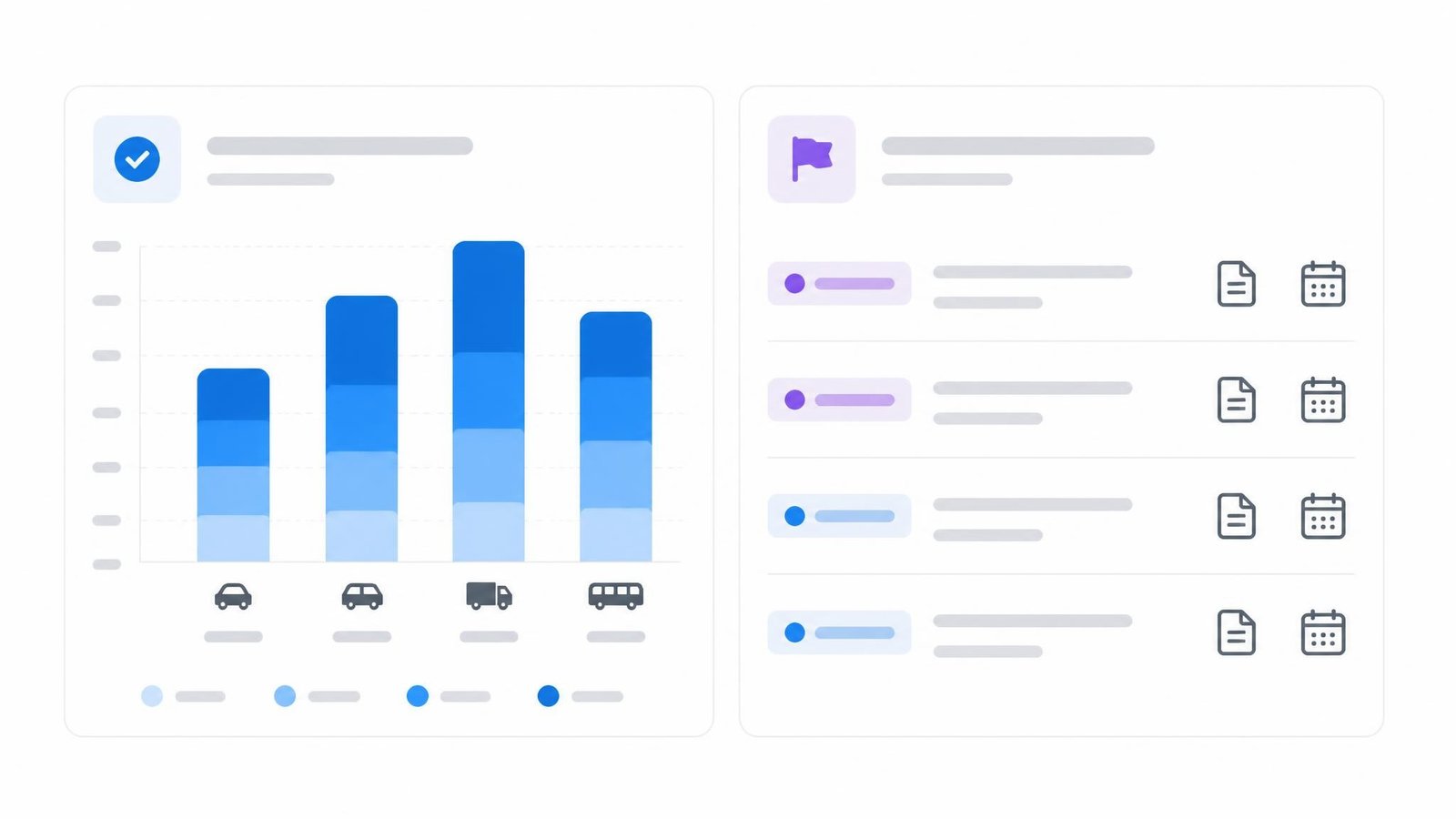
A completed reconciliation produces two outputs.
The first is a validated cost per vehicle per month: the charges that passed every applicable check, ready for authorised payment. This is the figure that feeds total cost of ownership analysis and makes cost per vehicle per month a usable management metric, rather than an aggregate that cannot be explained.
The second is a set of exceptions: the charges that failed one or more checks, each with the contract clause, vehicle dates and invoice line attached, so that a named person can decide whether to dispute, defer or approve. Exceptions are not a sign that the process has failed. Surfacing them is what the process is for.
Over time the exceptions also say something about suppliers. A recurring pattern of rate discrepancies or charges for inactive vehicles from one supplier is an input to supplier review and contract renewal, not just a month-end correction. Together, these outputs deliver the financial control benefits of structured fleet reconciliation.
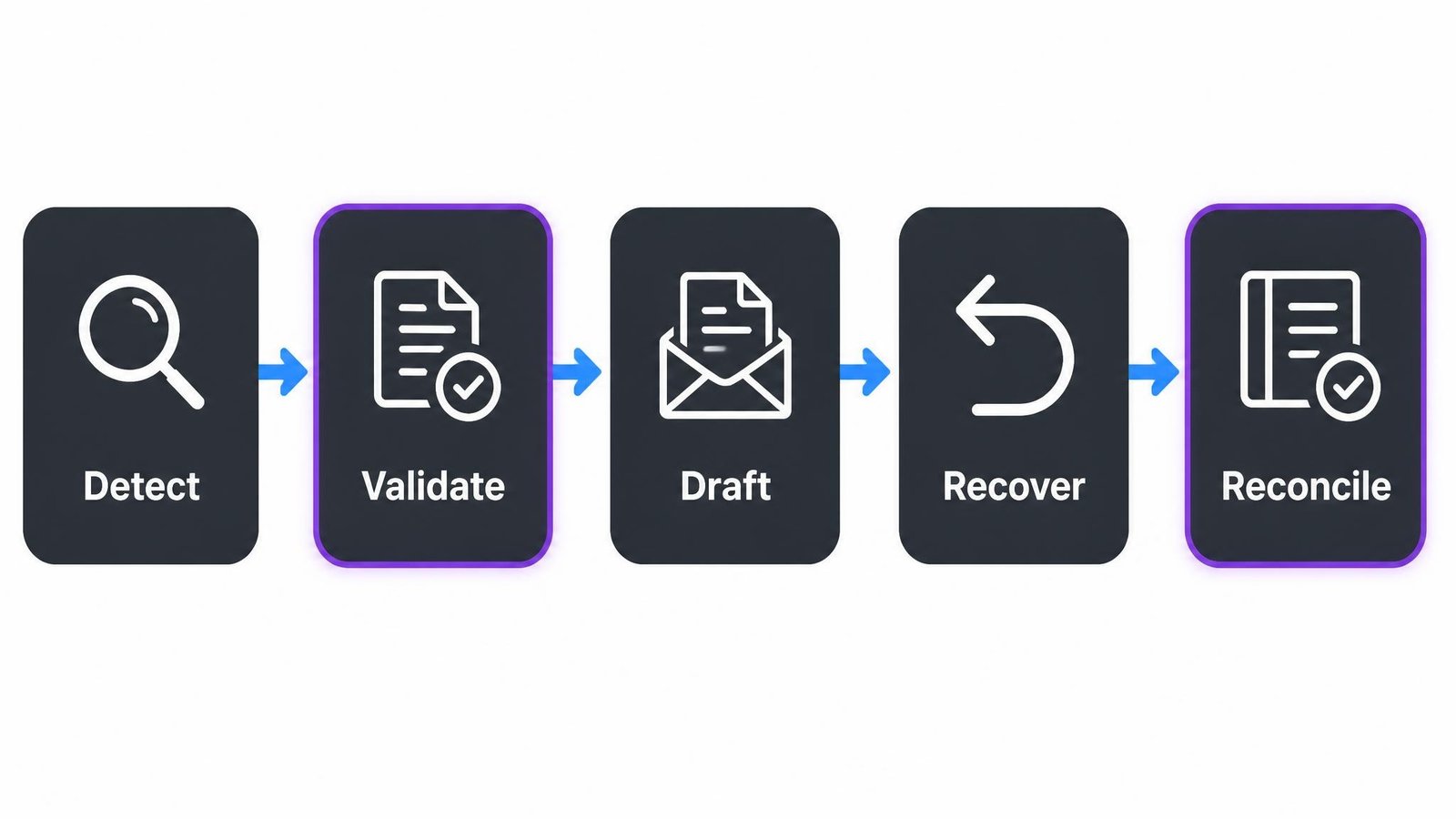
Fleet FinOps is the financial management discipline of identifying, validating, recovering and optimising fleet spend using operational, contractual and financial data. It follows a five-step workflow: Detect, Validate, Draft, Recover, Reconcile.
Invoice checking and reconciliation appear at both ends of that workflow, and they do different jobs:
Without the final step, a dispute that the supplier accepted but never credited looks resolved when it is not.
A platform that connects vehicle records, contract data and invoice data in near-real-time can run the routine checks across every vehicle each month, for the invoice categories and data sources it is connected to, and present exceptions with their supporting documents. Always-on analysis, your decision: the category manager or finance lead keeps authority over every exception. OviDrive's fleet management platform is built to support this workflow.
Start with one invoice category this month. Lease rentals are a practical first choice: run the lifecycle check and the contract-rate check on the current invoice before it is approved. Those two checks alone will show whether vehicle-level charges agree with what was contracted.
If you want to build a repeatable reconciliation process across all invoice categories, OviDrive's fleet financial management services combine the platform with consulting support.
It is the monthly process of checking each charge on a lease, fuel, maintenance, insurance or ancillary invoice against the signed contract, the vehicle record and the period or event being charged, at the level of the individual vehicle.
Partly. Three-way matching compares the invoice with a purchase order and a receipt, and can check price as well as quantity. It does not establish whether the purchase order reflects the current contract terms for each vehicle, or whether a return, transfer or extension has changed what should be charged. Fleet reconciliation adds those checks.
Yes, for some charges. Final charges such as excess mileage, end-of-lease damage or other obligations remaining under the contract can be billed after return. Recurring rentals or premiums after return should be checked against the effective contract end date and the applicable terms. Where there is no contractual basis for continuing them, flag the charge for dispute.
Validation checks an invoice before payment. Reconciliation, the last step of the Detect, Validate, Draft, Recover, Reconcile workflow, confirms afterwards that disputes, credits and recoveries were settled as agreed.
For savvy fleet managers looking for the latest trends and opportunities to improve their fleet's performance.


Copyright © OviDrive Group of Companies • Made with 💜 in Australia 🦘 • Operating in 36 countries and 3 continents 🌎
